Designing buildings:
the energy part
Architectural, material, human, and environmental factors that shape a building's energy use — each modelled as a side-by-side comparison in Aladdin
Aladdin can be used to design buildings with a variety of architectural styles. In this article, we will walk through various architectural, material, human, and environmental factors that affect the energy use of a building. According to the U.S. Energy Information Administration, heating and cooling make up more than 65% of residential energy use in the United States, so the energy efficiency of a residential building is largely about its thermal efficiency. The International Energy Conservation Code (IECC 2021) recommends standards for different regions around the world — to understand the code, you will need to learn the science and engineering behind it.
Under each circumstance, we compare the energy use of two houses that are identical in every aspect except the control variable. In this way, the difference in energy use can be attributed solely to the control variable.
Building envelope vs. thermal envelope
The energy used to heat and cool a building is determined by its thermal envelope (which includes solar heat gains through window glazing). A thermal envelope is part of the building envelope — all of the elements of the outer shell that maintain a comfortable indoor environment. Not all elements of the building envelope are part of the thermal envelope. For example, a roof may not be part of the building envelope if insulation is installed above the ceiling rather than underneath the roof itself.
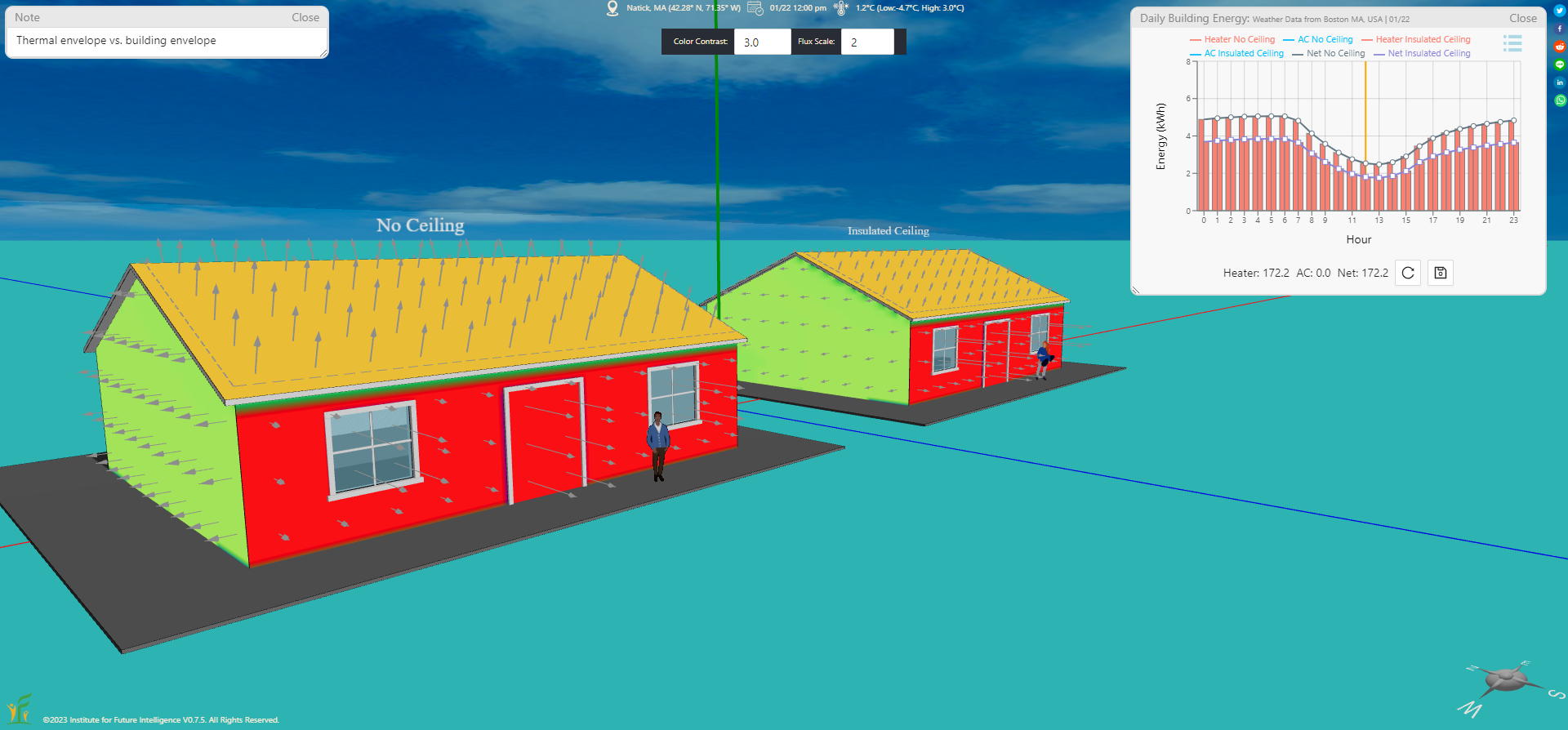
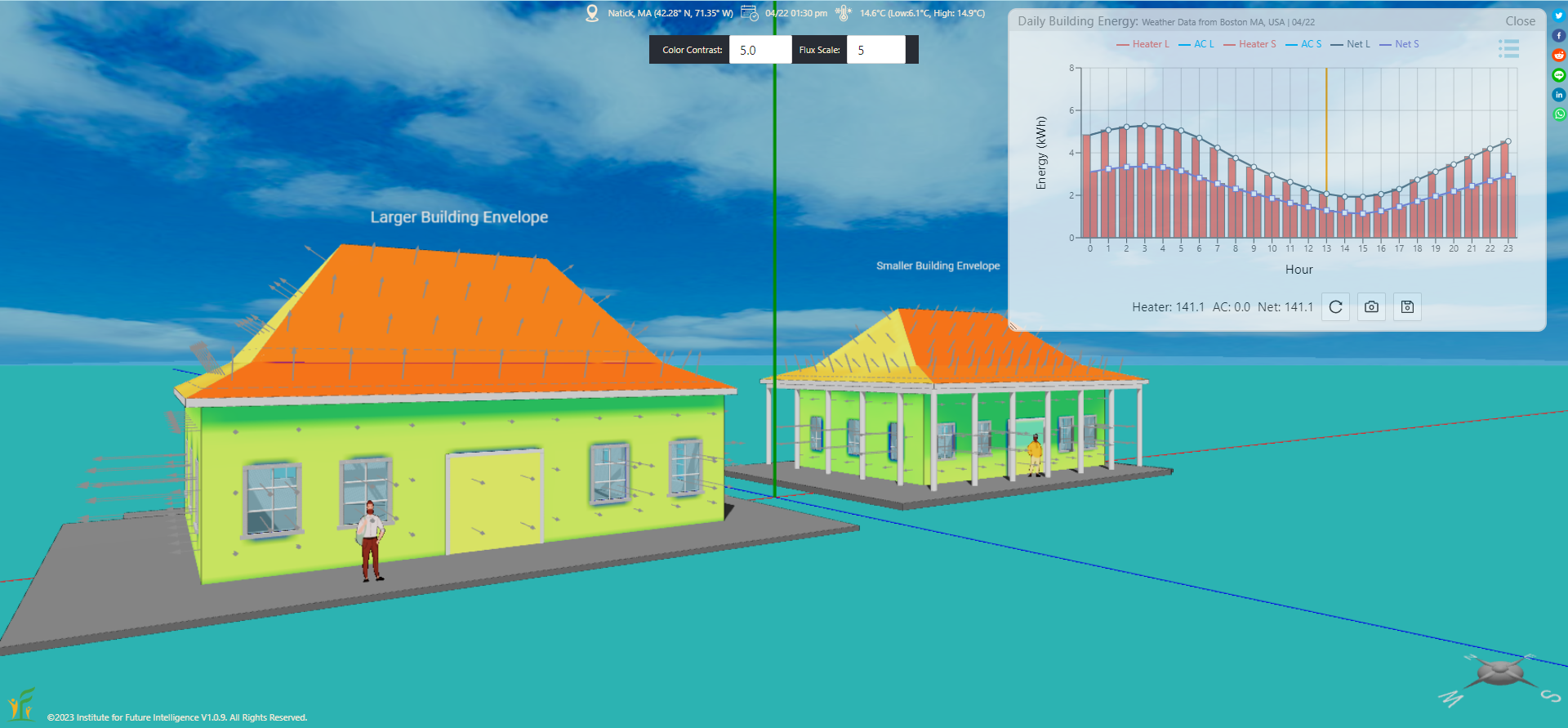
Architectural design can also affect the thermal envelope significantly. The following screenshot compares two houses with seemingly similar building envelopes — but one has a larger thermal envelope than the other (because the latter is surrounded by open porches that are not part of the thermal envelope).
The effect of building size
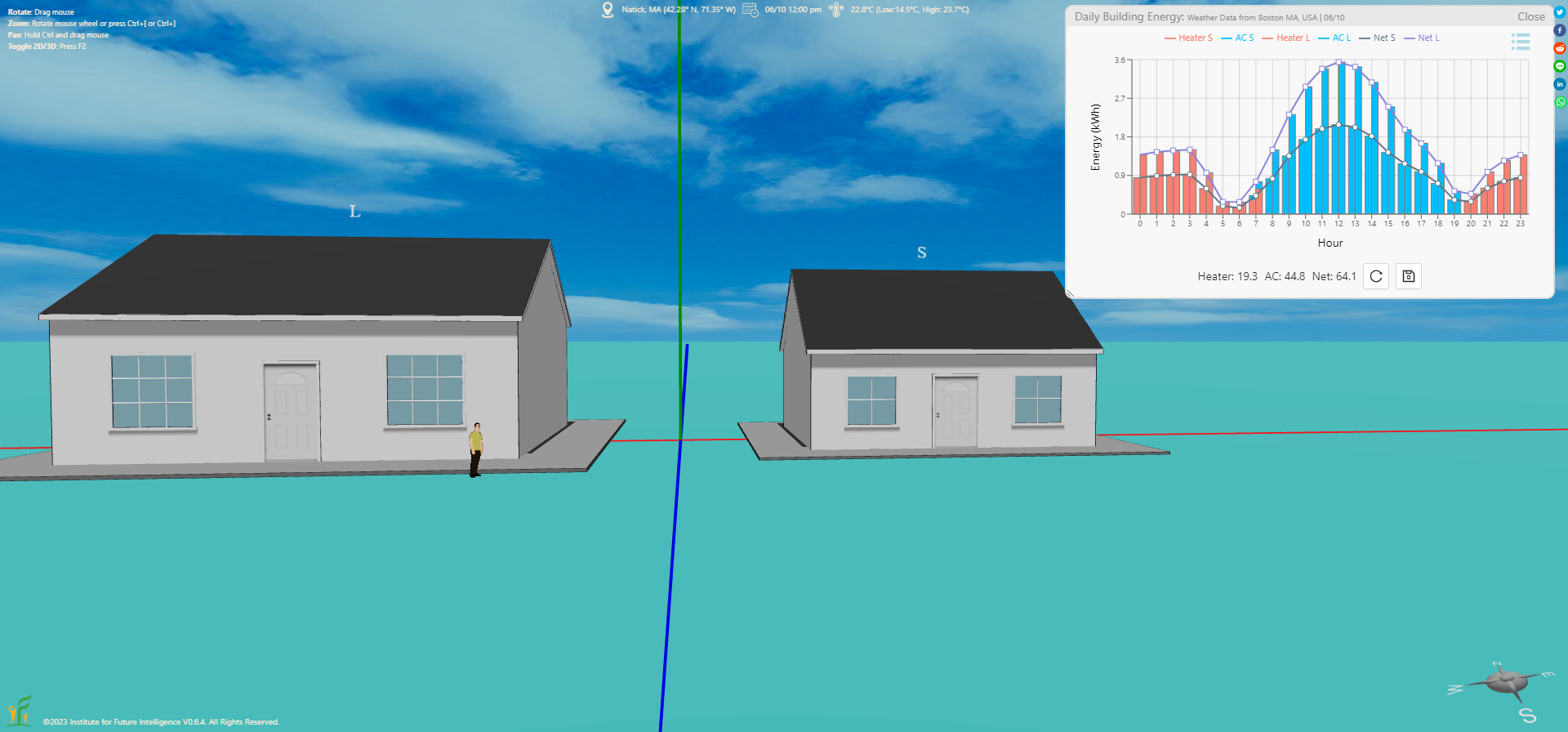
The energy that a building consumes depends on its size. A larger building has a larger interface for heat exchange between inside and outside — and a larger volume of air that needs heating or cooling to maintain indoor thermal comfort. The following model compares the energy consumption of a large building and a small one in Massachusetts on June 10.
The effect of building orientation
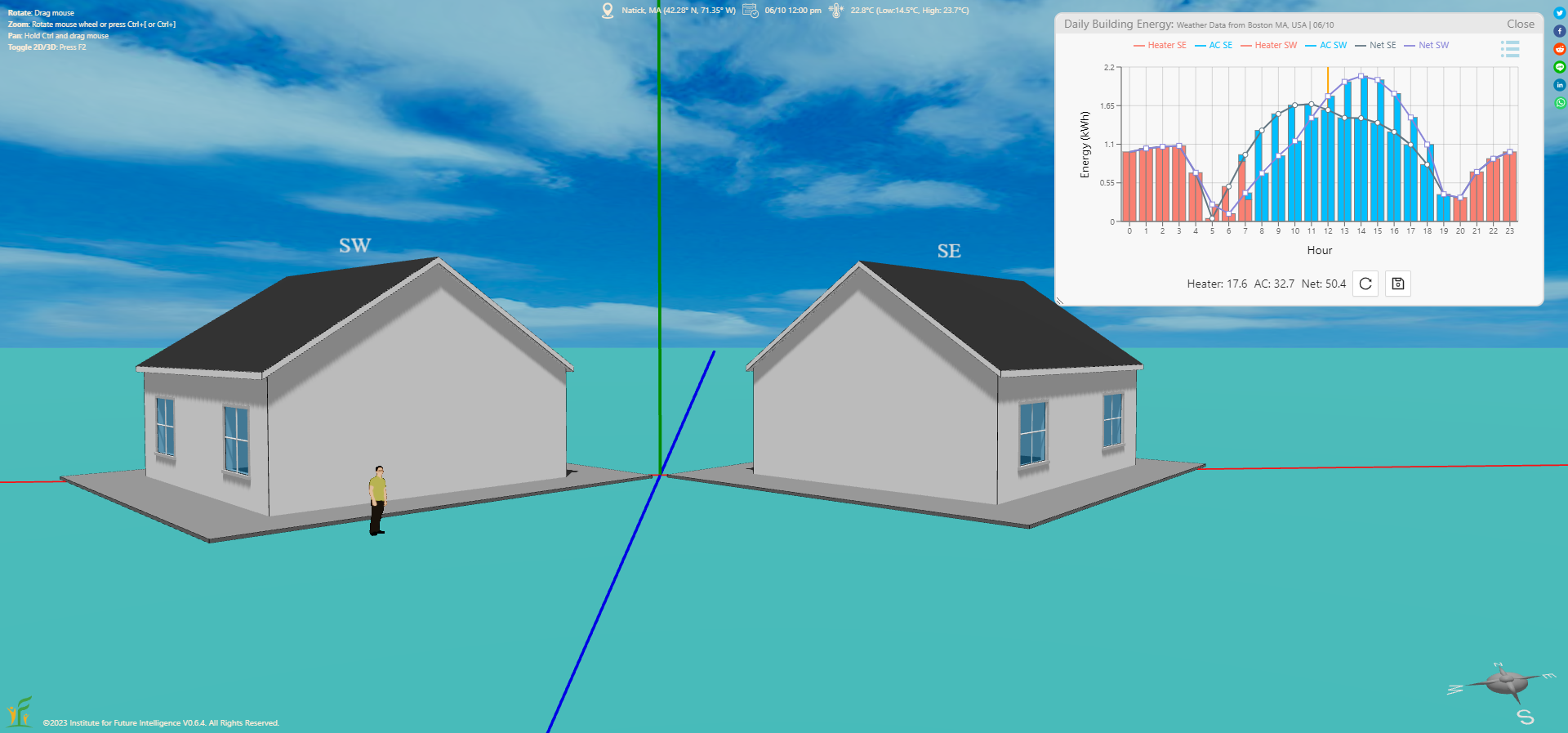
A building receives solar energy throughout the day when the sun shines. As the sun's angle changes from sunrise to sunset, the solar energy landing on surfaces of the building envelope varies. A building may get much more solar energy through a unit area of windows than through walls and roofs: windows transfer heat directly through thermal radiation, while walls and roofs transfer heat to the inside through thermal conduction after their exterior surfaces are heated (so only a small portion reaches the inside). The orientation of a building makes a difference in hourly solar heat gains when there are unequal window areas on different walls.
The effect of building insulation
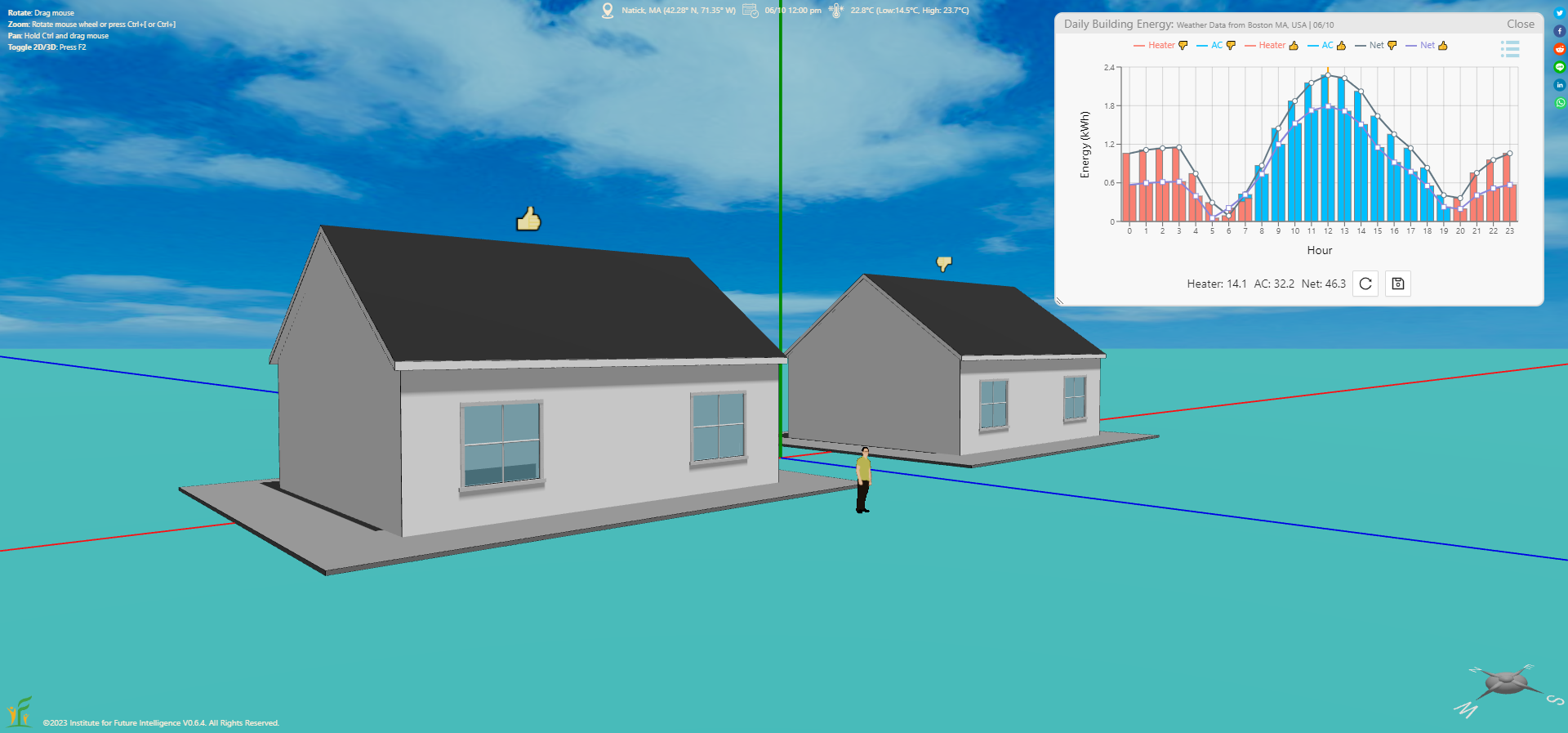
A well-insulated building consumes less energy than a poorly-insulated one. This applies to both heating and cooling, as thermal insulation slows down heat flow regardless of its direction. The insulation property of a wall or roof is set by its R-value, whereas that of a window or door is set by its U-value (the inverse of the R-value), as per U.S. convention.
The effect of airtightness
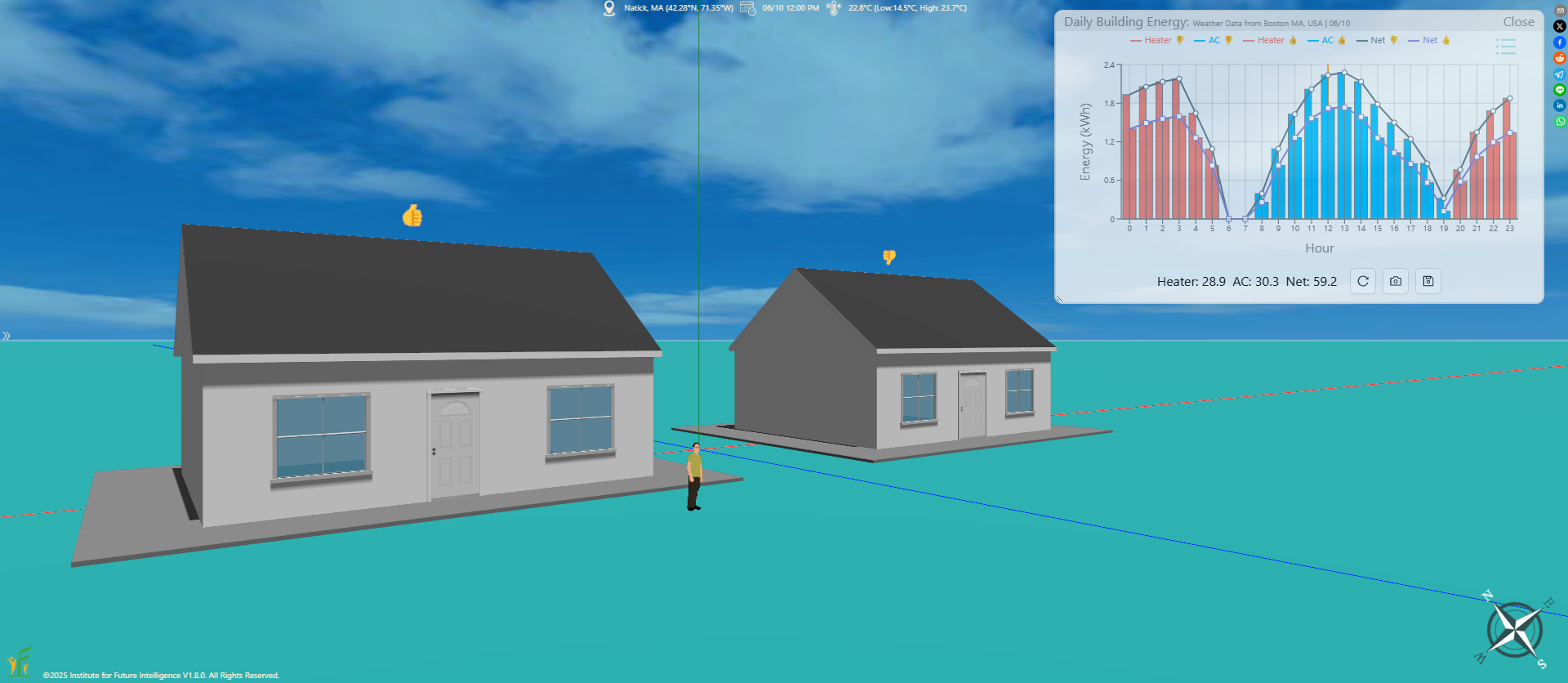
Building airtightness measures the rate of unintentional air exchange with the outside environment through the building envelope. In Aladdin, you can set air permeability for walls, roofs, windows, and doors. Higher air permeability of a building element results in higher energy use for both heating and cooling.
The effect of roof color
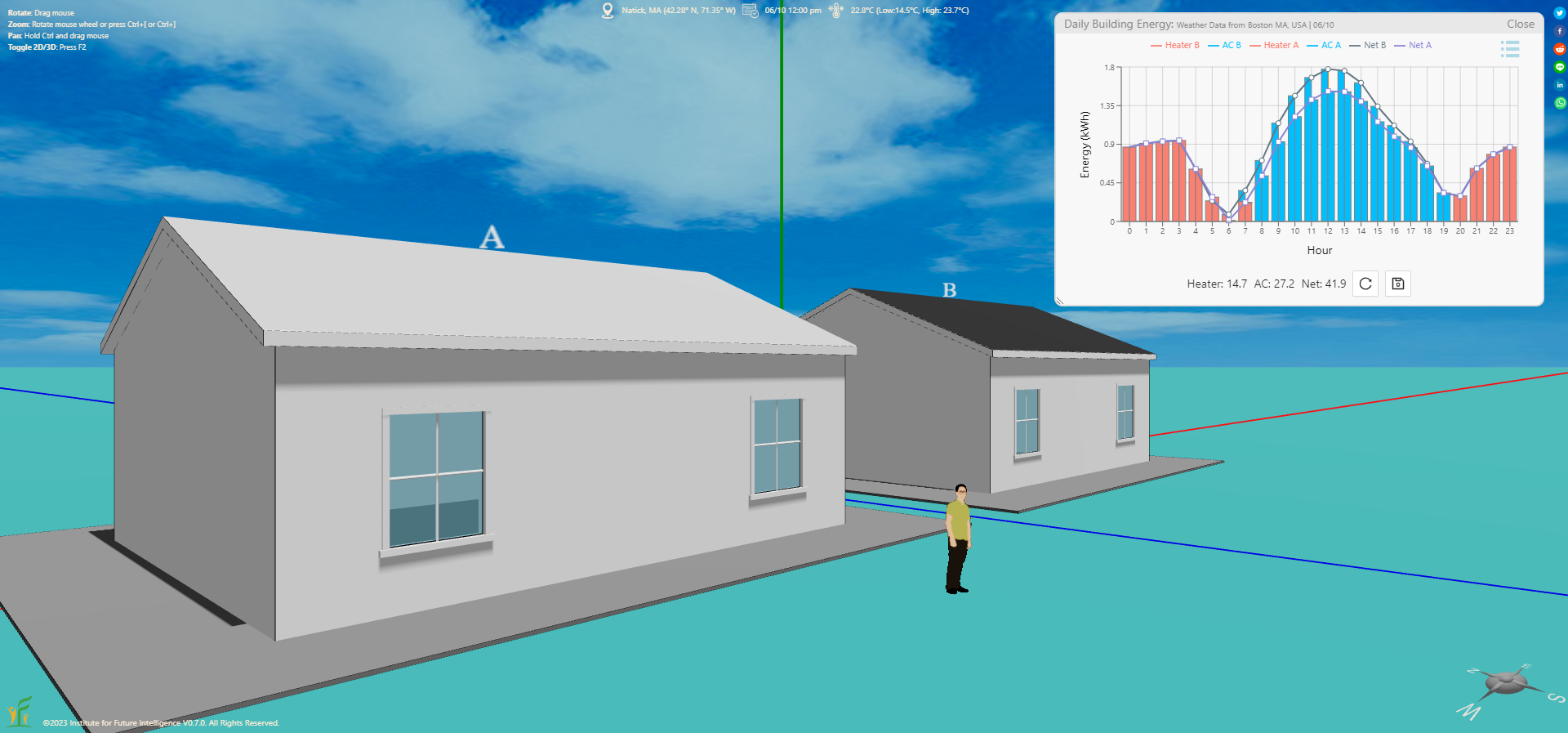
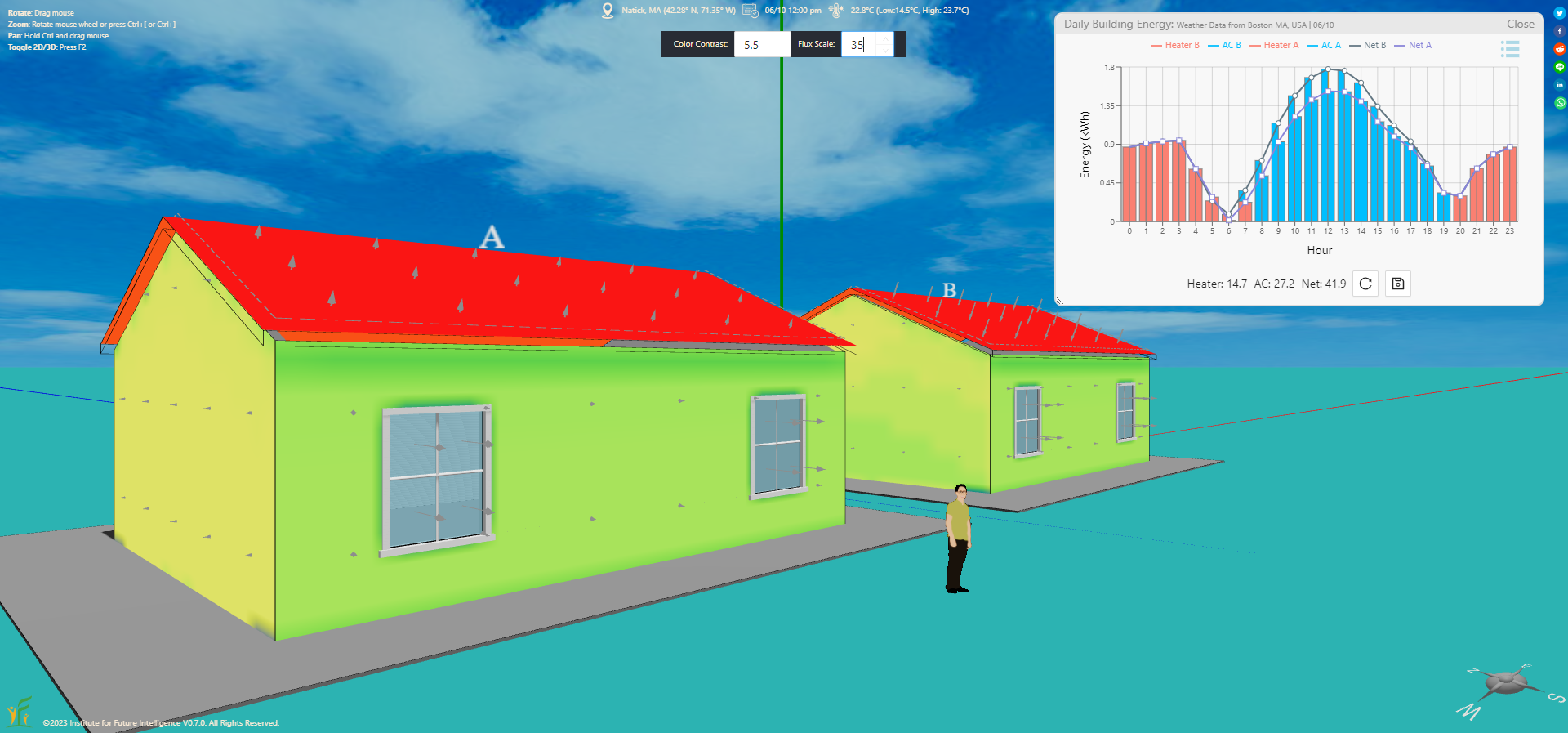
A roof that reflects more sunlight (and therefore absorbs less solar energy) can save cooling energy in the summer. This is the idea behind cool roofs. The model below compares the energy use of a house with a dark-colored roof and one with a light-colored roof. All other properties are identical.
The effect of eaves overhang
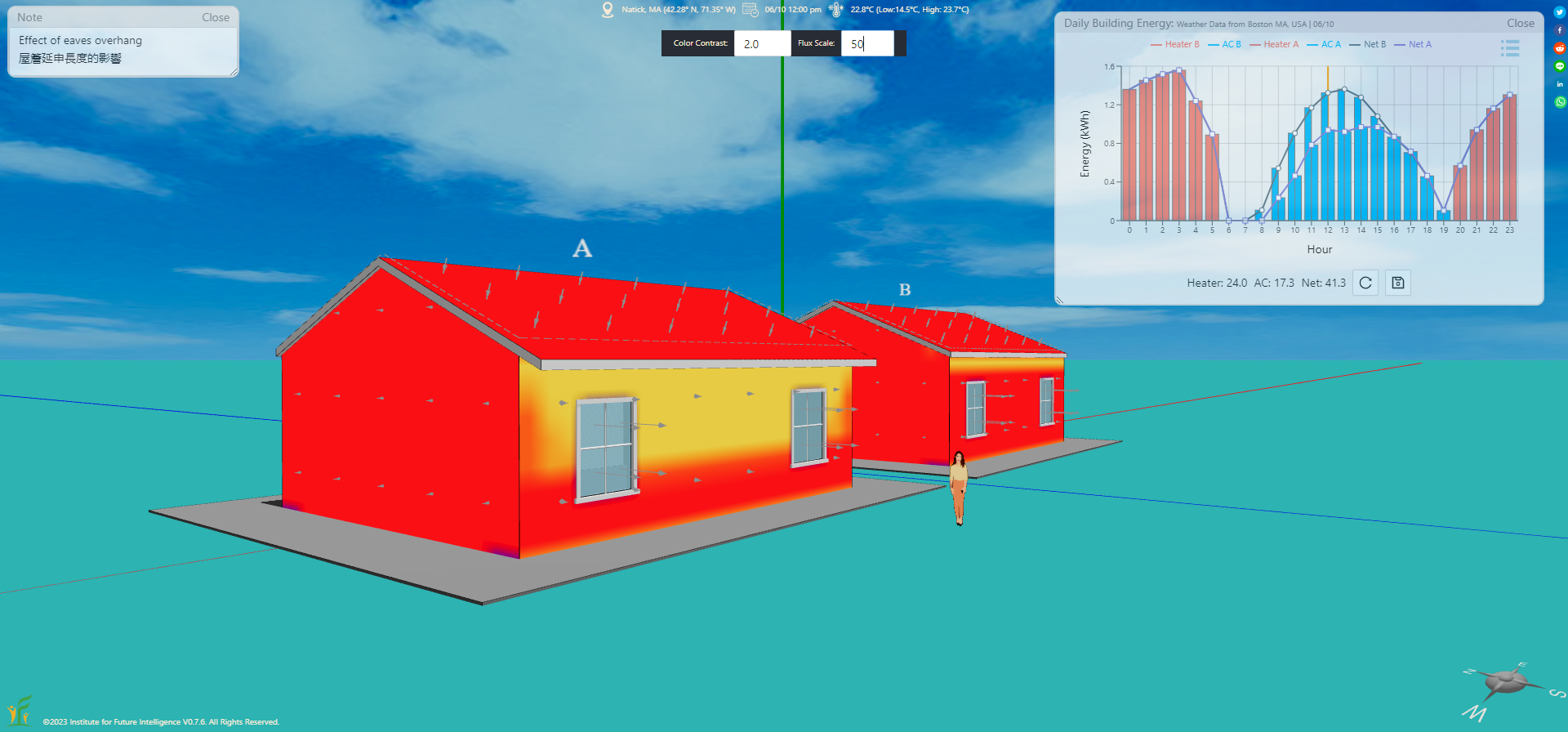
Eaves can provide shading for the windows, walls, and doors under them in the summer, reducing the energy needed to cool the building. The following model compares a house with a longer eaves overhang above its south-facing wall and one with a shorter eaves overhang.
The effect of solar heat gain coefficients of windows
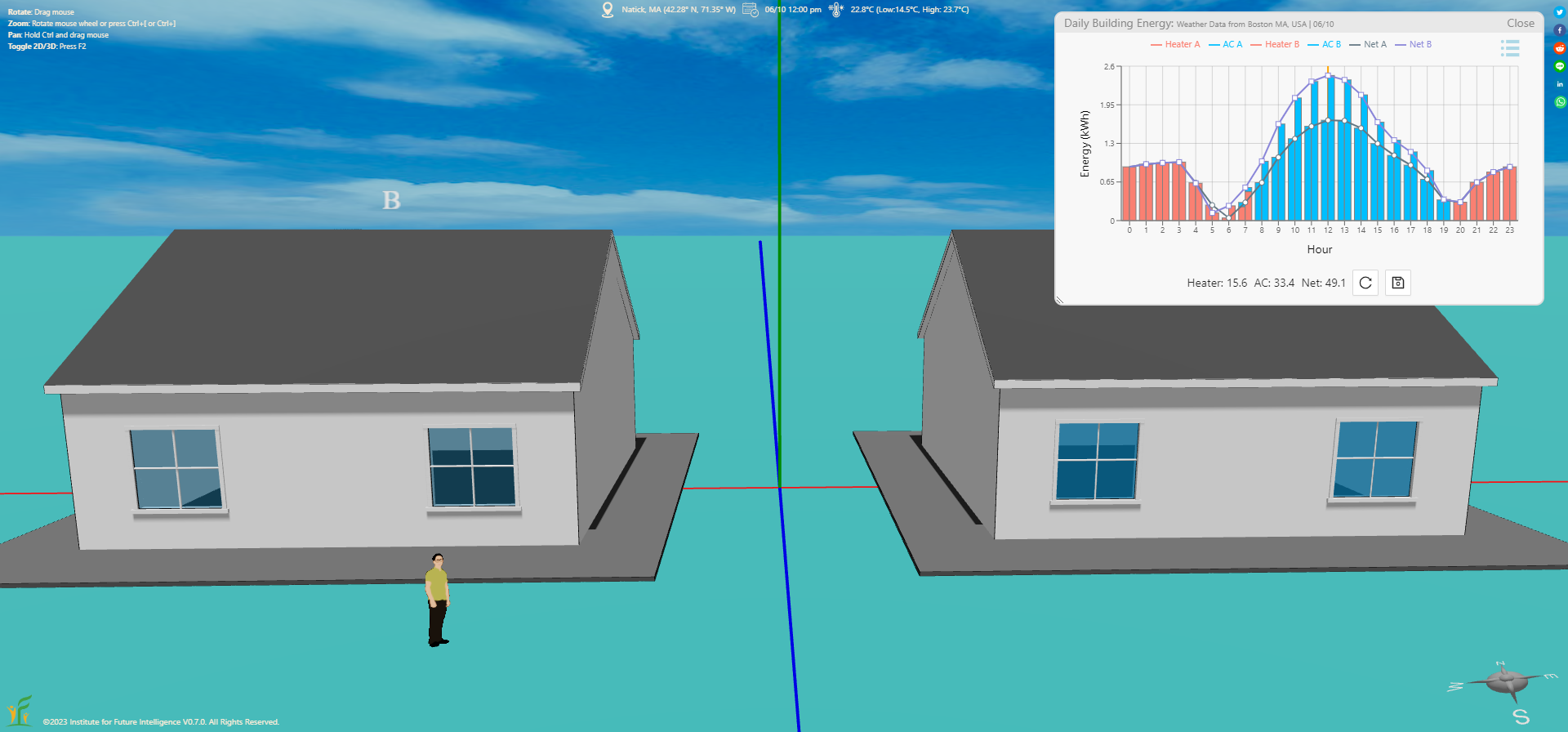
The solar heat gain coefficient (SHGC) of a window determines the portion of solar energy that is allowed through it. The model below compares a house with windows that have a higher SHGC (0.65) against one with windows that have a lower SHGC (0.35). All other properties are identical.
The effect of thermostat setpoint
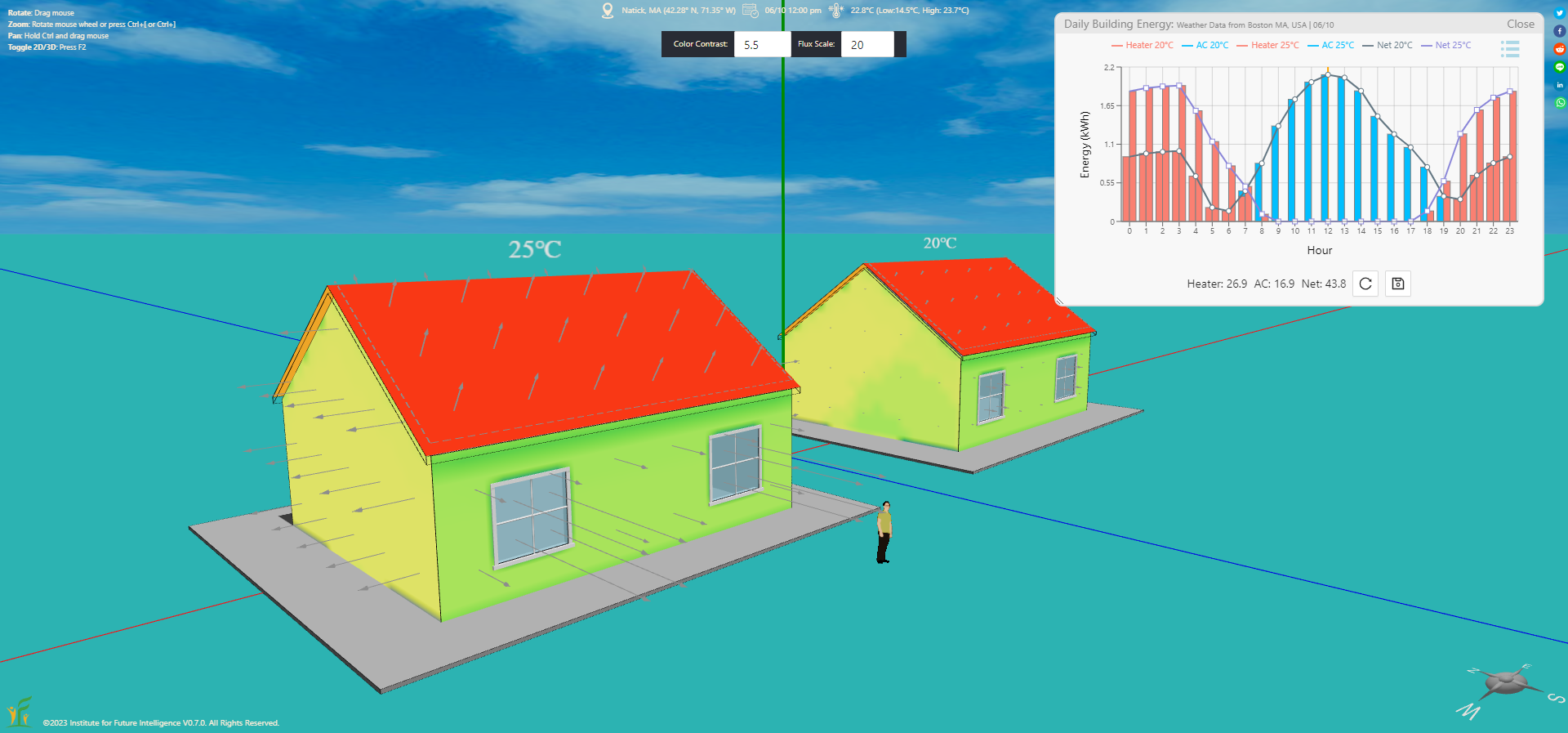
The energy consumed by a building is also affected by the temperature inside it set by occupants (different people have different thermal comfort zones). This model compares the energy use of two houses with two different thermostat setpoints on a late spring day in Massachusetts — a season some people think is warm while others still think is cold.
The effect of a programmable thermostat
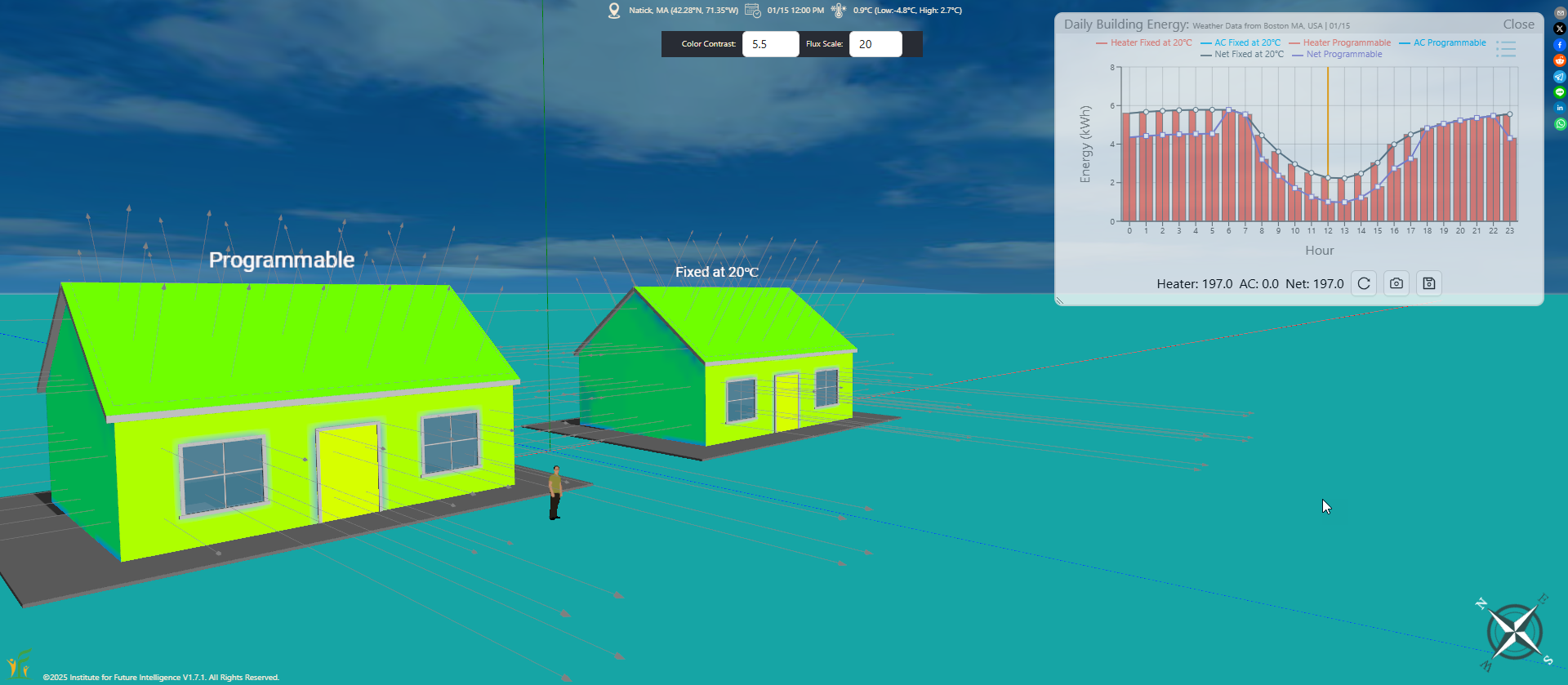
A programmable thermostat lets users set temperatures for different periods of the day based on their schedules and preferences. This model compares the energy use of two houses, one with a programmable thermostat and one with a fixed-temperature thermostat, on a winter day in Massachusetts.
The effect of solar panels
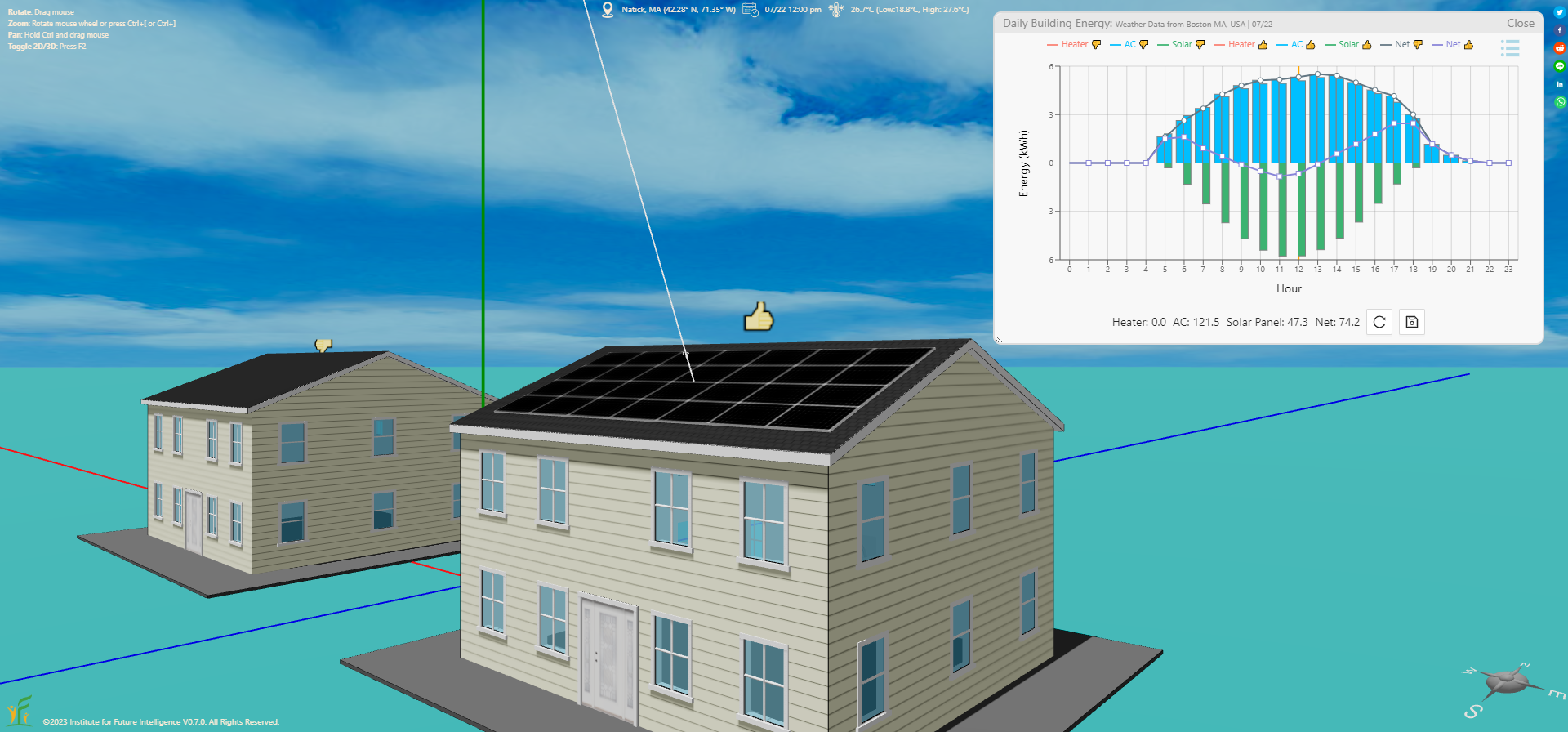
Solar panels can generate electricity on site to offset the energy use of a building. This model compares two identical houses, one with an array of rooftop solar panels and the other without.
The effect of ground temperature
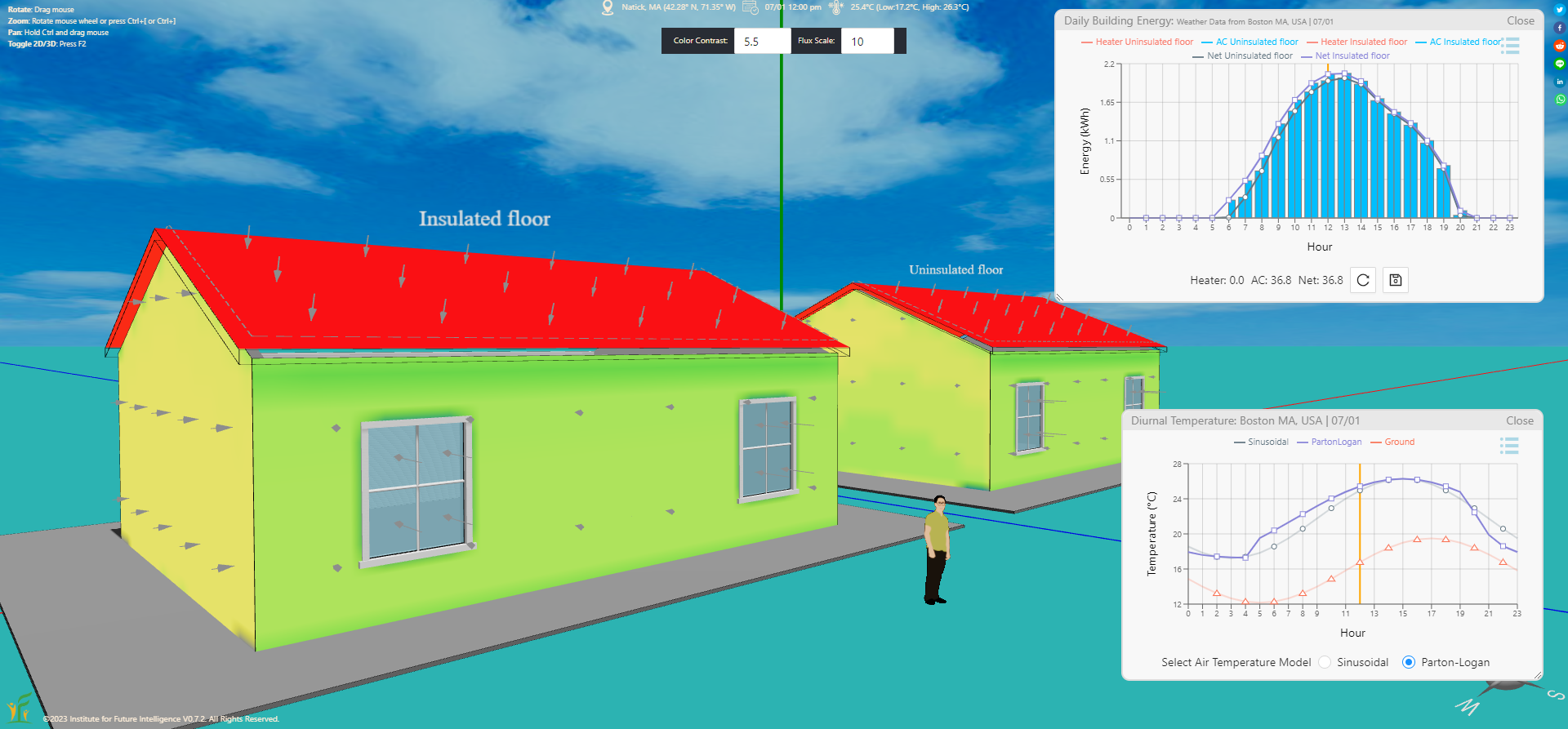
The temperature of the ground varies with depth: the deeper, the more it differs from the air temperature. In summer this difference may help reduce cooling energy; in winter it may help reduce heating energy. This model compares two identical houses, one with an insulated floor and one without.
The effect of trees
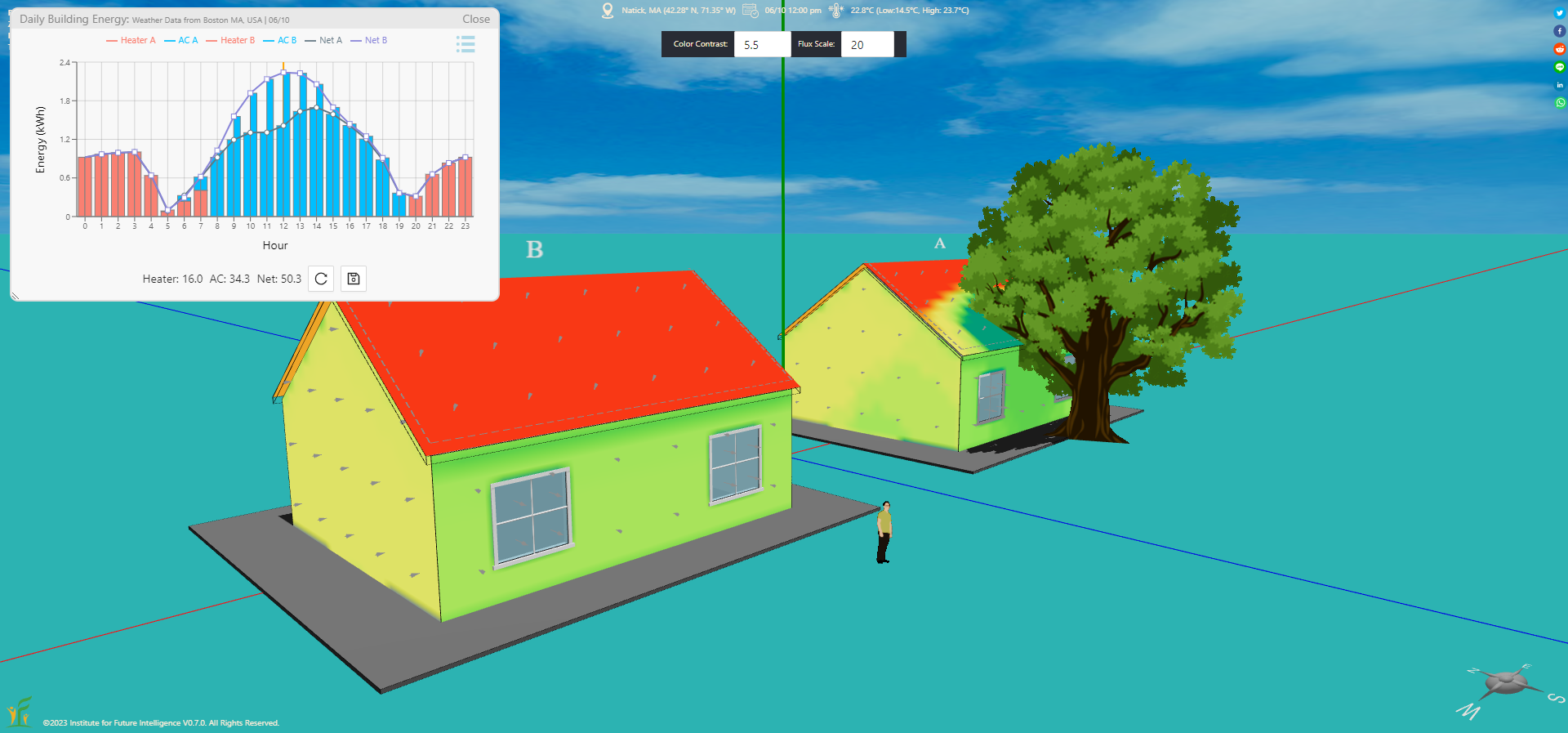
Trees can provide shading that reduces cooling energy in the summer. This model compares two identical houses, one with a tree near it and the other without.
Summary
This article walks through many factors that affect a building's energy use. Designing an energy-efficient building requires the designer to develop a basic understanding of all these concepts in order to make scientific decisions when weighing trade-offs.
Note
We mainly analyze simple buildings in this article. A simple building is one that has no intersecting substructures (substructures are usually created on different foundations in Aladdin) on its envelope. The analysis of complex buildings involves more work and is detailed in a separate article.